
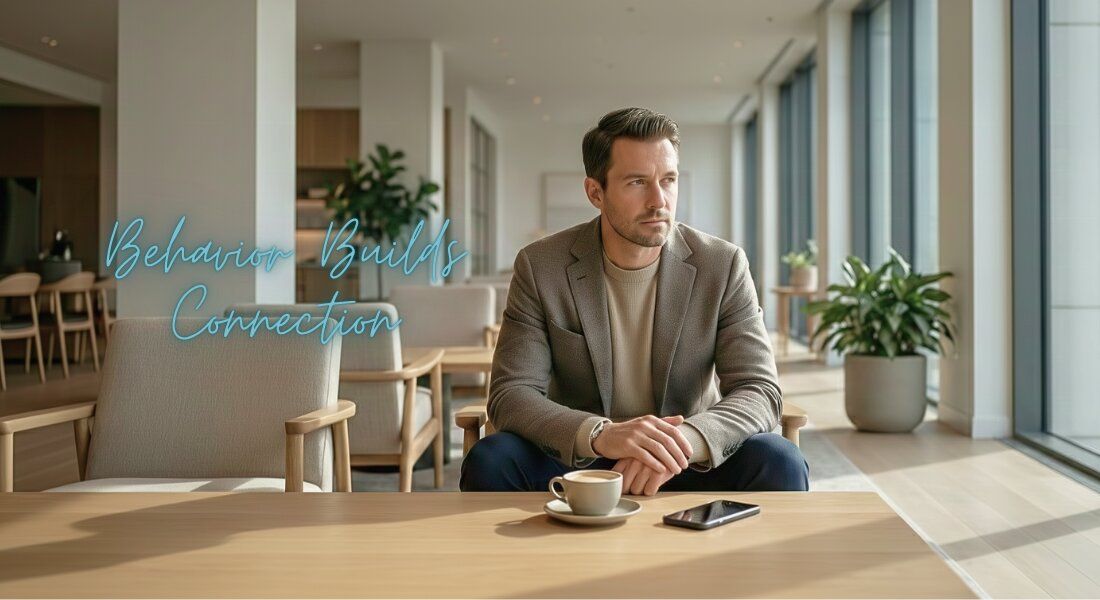
Many high-performing men enter elite matchmaking with an unspoken assumption. They believe once access to the right women is handled, everything else should fall into place.
That assumption makes sense. You have built companies, led teams, and navigated complex negotiations. You understand leverage, systems, and execution. It feels reasonable to believe that once the right introduction happens, chemistry and momentum will take care of themselves.
Often, that isn’t what happens. You have to discover that spark and connection for yourself.
In dating, credentials don’t predict outcomes. Behavior does.
Status Creates Access, Not Connection
Professional success solves one problem in dating: visibility.
It signals competence, stability, ambition, and drive. In elite matchmaking, it opens doors that would otherwise remain closed. It earns you a seat at the table.
But access alone doesn’t create alignment.
Income doesn’t guarantee emotional availability. A title doesn’t produce patience. Influence doesn’t automatically translate into consistency or care.
In business, strong performance can offset personality blind spots. When it comes to relationships, those blind spots tend to surface quickly.
Once introductions are thoughtfully curated and values align on paper, the deciding factor is no longer your résumé. It’s how you show up.
Attraction may open the door, but sustained connection depends on presence,
responsiveness, and emotional awareness, not professional proof.
The Gap Many Accomplished Men Don’t See at First
Many successful men arrive here after a divorce or the end of a long-term relationship in which career demands dominated daily life. When they return to dating, they do so with maturity, resources, and genuine intention.
What surprises many is that dating has changed. Expectations have shifted. High-quality women are no longer looking for provision alone. They want partnership, emotional steadiness, and a shared vision for life.
The skills that built your career are valuable, but they are not the same skills that build intimacy. That realization can be uncomfortable.
Elite matchmaking makes this visible quickly. On paper, everything aligns: lifestyle, values, intelligence, attraction. But if pacing feels rushed, listening feels shallow, or emotional range feels limited, momentum fades.
Not because you lack qualifications. Because you’re using tools designed for a different environment.
Building Relationship Success at This Level
As a professional matchmaker, one recurring insight comes up again and again: It’s not about success or status; it’s behavioral.
Many of these men come to us after a divorce or a failed relationship. In most cases, they worked so hard that they stopped paying attention at home. Later, they realize that the lack of presence is what caused things to unravel.
The second time works better when they’re willing to adjust, recognize they have more time and energy, and have a chance to approach relationships differently. Having guidance simply accelerates that shift.
Dating success isn’t an extension of career success. It’s a separate discipline. Like any discipline, it responds to awareness, calibration, and practice.
When Business Instincts Work Against You
High-level professionals are trained to move quickly, lead conversations, control outcomes, and focus on results. Those instincts are powerful in competitive environments.
In early dating, they can quietly create friction:
- Moving too fast can feel transactional.
- Over-explaining can feel self-focused.
- Efficiency can feel impersonal.
- Control can feel rigid.
Attraction grows under different conditions. It responds to patience, attentive listening, emotional range, subtle pacing, and presence without pressure. These traits aren’t rewarded in boardrooms, but they are foundational in relationships.
That doesn’t mean abandoning your edge. It means refining it. Strength without sensitivity can read as dominance. When strength is paired with attunement, it reads as grounded confidence.
A Client Turning Point
One client, a founder who had taken two companies public, entered elite matchmaking with certainty. He was decisive, charismatic, and used to commanding rooms.
Early introductions went well on paper. Conversations were impressive but unbalanced. He spoke in strategies and outcomes. He met vulnerability with solutions. Each date felt more like a pitch than a connection.
The feedback from the women was consistent: intelligent, attractive, driven, but hard to connect with.
Instead of dismissing it, he paused.
The client asked fewer logistical questions and more values-based ones. He practiced sitting with silence and noticed when he interrupted. He allowed moments to breathe rather than fill them.
Within three months, the experience shifted. Women described him as present, grounded, and magnetic.
Nothing about his accomplishments changed. His behavior did.
Today, he is engaged, not because he has become someone else, but because he has learned to integrate performance with presence.
Why Adaptation Becomes the Real Advantage
High-performing men are exceptionally capable of adjustment once patterns become clear.
They become more deliberate with time and protect space for connection. Instead of treating dating like a performance metric, they begin treating it as a long-term life decision.
The men who thrive in elite matchmaking aren’t always the flashiest or wealthiest. They are the ones willing to consider that a different approach may be required.
When access is paired with behavioral awareness, outcomes improve, not because of status, but because of alignment.
If you are stepping into this next chapter, it may be worth asking yourself a simple question: Are you optimizing for impression, or for intimacy?
Questions Men Often Ask Before Making This Shift
If I’m already successful, what does elite matchmaking really add?
It removes noise, streamlines access, and provides perspective. Thoughtful feedback, behavioral calibration, and strategic insight often accelerate progress in ways independent dating does not.
Is dating really that different from business strategy?
Yes. Business rewards speed, scale, and control. Relationships reward pacing, empathy, and emotional intelligence. While the disciplines overlap, the success metrics differ fundamentally.
What if I haven’t dated seriously in years?
That’s common. Social norms and expectations evolve. Structured, discreet guidance helps you navigate those shifts without trial-and-error fatigue. The aim isn’t to impress. It’s to connect.
How do I know if I’m emotionally available?
Look at your patterns, not your intentions. Do you protect time for connection, or does work consume every margin? Availability shows up in consistency, not declarations.
Can small behavioral changes really make a difference?
Yes. Subtle shifts in listening, pacing, and responsiveness can dramatically change how you’re experienced. Attraction often lives in nuance.
What if I’m hesitant to change who I am?
Growth doesn’t require losing your drive. It adds dimension to it. Depth, not dilution, is what many high-caliber women respond to.
Is a strong second partnership realistic at this stage?
Very much so. Many men build healthier relationships the second time because experience, when reflected on, becomes wisdom.
Where do I even begin?
Start with honesty. Acknowledge where ambition may have crowded out connection. Then approach this chapter with the same intentionality that built your career.
Moving Forward With Intention
If you’re ready to approach this chapter deliberately and with the same clarity that guided your career, reach out to The Standard Agency.
The next phase doesn’t require reinvention. It asks for intention.